


In recent months, ads for new “next-generation walkie talkies” have been flooding social media. They promise nationwide communication, rugged reliability, and—most boldly—guaranteed performance during disasters. Many of these devices rely on 4G LTE or similar cellular infrastructure, marketing themselves as the ultimate emergency radio. But here’s the hard truth: if the cell network goes down, these devices go silent.
Most of these folks claim there is NO annual or monthly fee, that’s just plain wrong. You dig a little deeper in their websites and there’s always some reference to the 4G fee you’ll be paying or the unit will not work.
It’s a deceptive promise dressed in sleek tech jargon—and it can create a dangerous false sense of security when lives are on the line.
The Illusion of Independence
The marketing pitches sound convincing: “Unlimited range!” “No need for repeaters!” “Works anywhere with signal!” But buried in that last phrase is the catch—“anywhere with signal.”
Unlike true two-way radios, such as FRS, GMRS, or professional VHF/UHF systems, these 4G-based devices are not direct radio transceivers that talk to each other via radio waves. Instead, they connect through existing cellular networks—just like a smartphone. In other words, your signal travels from your device → to a nearby cell tower → through the carrier’s network → and then to your contact’s device.
That chain has several fragile links. Knock out one tower—or a fiber line feeding it—and the entire region can lose coverage.
What Really Happens When Disaster Strikes
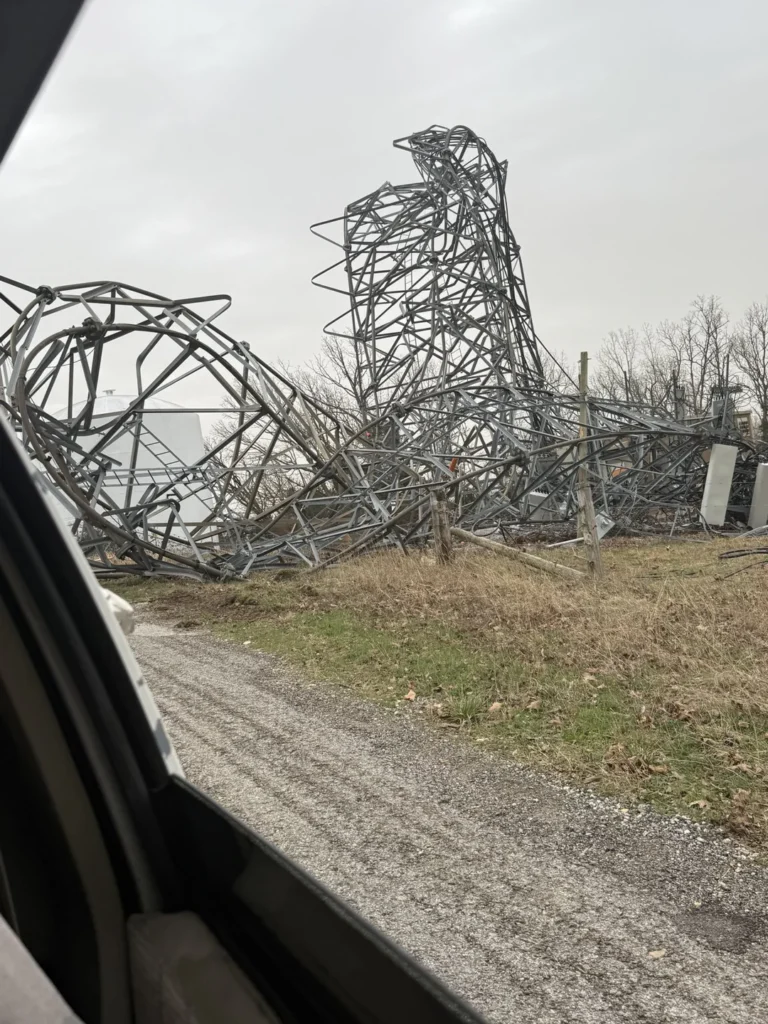
Natural disasters often cripple communication infrastructure. Earthquakes, hurricanes, wildfires, and floods all have one thing in common: they destroy cell towers, power grids, and internet backbones.
Consider recent history:
- Hurricane Ian (2022): Nearly 1,600 cell towers went offline in Florida.
- Maui Fires (2023): Large parts of Lahaina had zero cellular coverage for days.
- Seattle Snow and Windstorms: Prolonged outages can disable both power and backup batteries at tower sites.
When that happens, LTE-dependent radios STOP WORKING—because they’re only as functional as the nearest cell tower. Even if one tower has a generator, most backup systems only last a few hours without refueling or maintenance. After that, you’re off the grid.
The Marketing Spin: Deceptive Claims and Half-Truths
Manufacturers often use buzzwords like “nationwide PTT (Push-to-Talk)” and “network-based communication.” They highlight features like GPS tracking and encryption, implying advanced technology equals reliability. But these claims disguise an inconvenient truth: these devices are glorified cell phones with a speaker-mic interface.
Their big selling points—range, clarity, and scalability—depend entirely on a working commercial cell network. The phrase “works during disasters” is therefore deceptive at best and dangerous at worst.
From a regulatory standpoint, the Federal Trade Commission (FTC) considers false or misleading claims about safety or performance a violation of truth-in-advertising standards. Suggesting a 4G-based radio will “keep you connected when nothing else works” likely falls under that category.
The Real Alternatives: What Actually Works When the Grid Fails
When the goal is resilient communication, there are proven technologies that don’t depend on centralized infrastructure:
- FRS and GMRS Radios:
Simple, legal for public use, and ideal for short-range team coordination. - HAM (Amateur) Radio:
Works around the world using direct RF propagation and relay repeaters—many run by volunteers with independent power. - SATCOM (Satellite Communicators):
Devices like Garmin InReach or ZOLEO bypass cell networks entirely by using satellite constellations—expensive, yes, but they work anywhere on Earth. - Mesh Radio Networks (LoRa / GoTenna):
Use peer-to-peer signals that relay through other devices. The more users, the stronger the network becomes. No towers needed.

The Bottom Line
Those flashy “4G emergency walkie talkies” might look tactical and high-tech, but they depend on fragile infrastructure that collapses when disaster strikes. Their marketing preys on fear and misunderstanding—calling them “disaster-proof” when they’re anything but.
Preparedness is about redundancy, not reliance. True communication resilience means choosing tools that work without the grid, not ones that disguise dependence on it.
When the towers go dark, you want something that still speaks loud and clear. Maybe that’s analog radio, maybe it’s HAM—but it’s definitely not 4G.
Author’s Note: This article is part of Ecolivable’s series on sustainable preparedness and technology reality checks, continuing the tone of “Will Your Car Survive an EMP? Understanding the Odds.”