"The FCMP IM4000 Compost Tumbler, Honestly Reviewed"
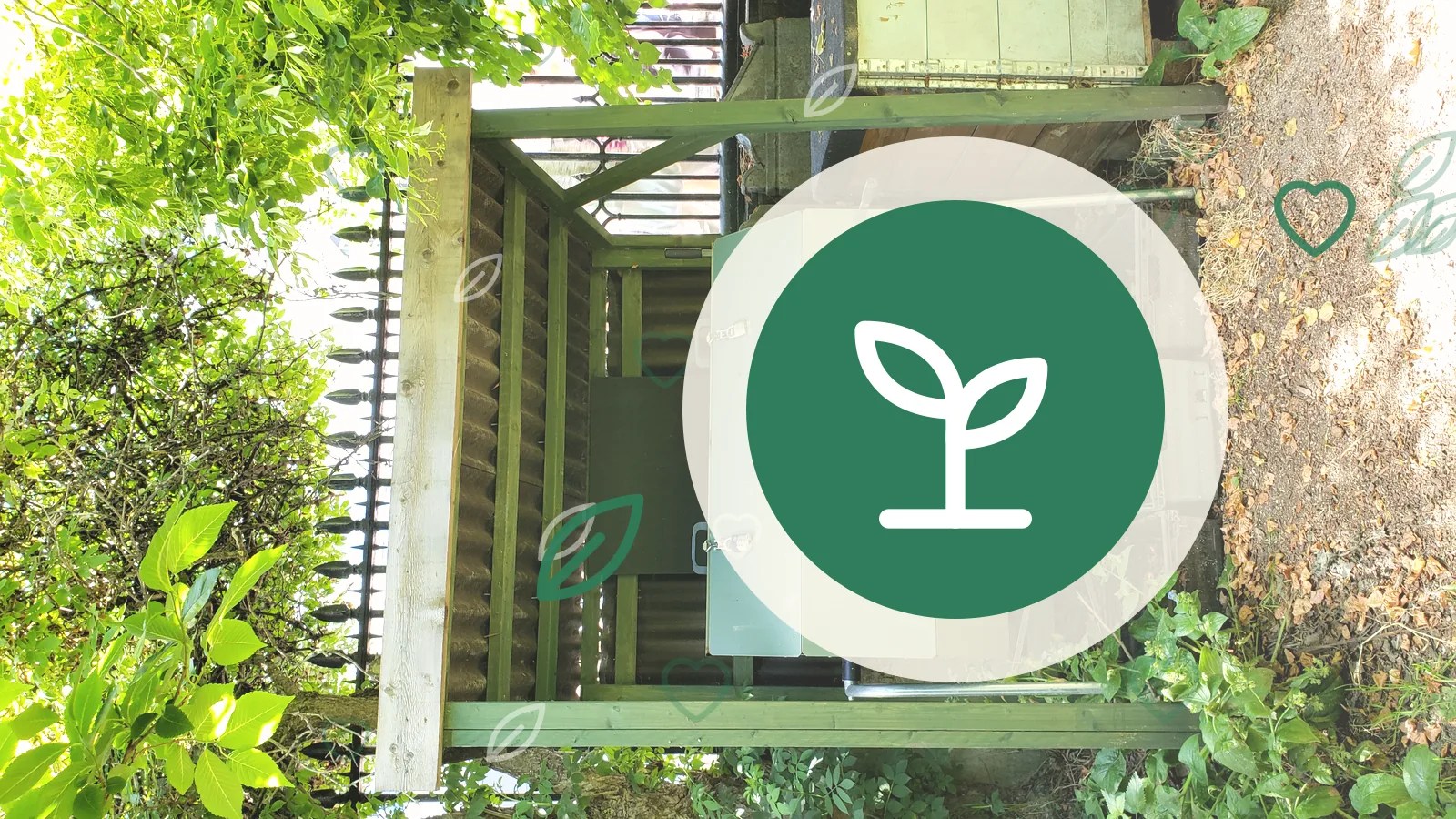
A compost tumbler promises something most open piles do not: a closed, elevated drum you can roll, with less bending, fewer wandering pests, and a neater look beside a vegetable bed. The FCMP Outdoor IM4000 has been one of the most widely purchased versions of that idea for years, which makes it a fair subject for a careful, research-based review.
This is not a season-long field test from our garden. It draws on the manufacturer's specifications, EPA's composting guidance, and a very large body of owner reviews. Compost is still a living process. A tumbler can make that process tidier. It cannot repeal the need for a sensible mix of greens, browns, air and a little patience.
The short version
The IM4000 is a 37-gallon, two-chamber tumbling composter. One side can take scraps while the other finishes, which is the design's real advantage. It is a good fit for a small yard or a tidy patio where an open pile would be unwelcome. It is less satisfying if you generate a lot of garden waste, if you want finished compost in a hurry in cold weather, or if you would rather keep a simple open heap and turn it with a fork.
If you are still deciding whether to compost at all, start with our beginner's composting guide. A tumbler is a container, not a shortcut around the basics.
What you are actually buying
The IM4000 sits off the ground on a frame, with a drum divided into two chambers and a total capacity of 37 gallons. You add material, close the door, and rotate the drum to mix and aerate it. Because there are two chambers, you can fill one, then switch and let the first side finish without adding fresh scraps that reset the clock.
That two-batch habit is why many people prefer a tumbler to a single open bin. EPA's composting at home overview still applies: a balanced mix of nitrogen-rich "greens" (food scraps, fresh clippings) and carbon-rich "browns" (leaves, torn cardboard, dry stems), plus air, is what keeps the pile from turning into a slimy, sour mess.
Owner reviews, in aggregate, tend to agree on a few practical points:
- The elevated design is easier on the back than turning a ground pile, and it keeps some pests from walking in at soil level.
- A 37-gallon drum fills faster than first-time composters expect, especially in autumn leaf season. This is a household-and-kitchen size, not a landscape-waste size.
- Tight packing, too many wet scraps, or long stretches without turning will still produce odor and slow results. The door and the latch are the parts people mention most when something feels flimsy after a few seasons in the sun.
None of that is unique to this model. It is the honest contract of a mid-size plastic tumbler.
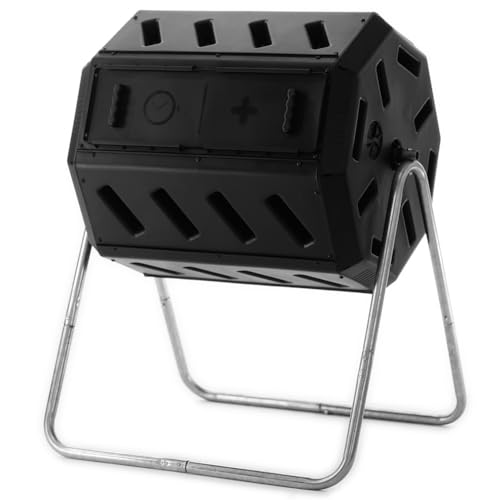
FCMP Outdoor IM4000 37-Gallon Rolling Compost Tumbler
A 37-gallon, two-chamber tumbling composter that sits off the ground. One side can be filling while the other finishes, which is the practical advantage over a single open pile.
Pros
- 37-gallon capacity with two chambers
- Elevated tumbling design, no turning a pile by hand
- A long-popular model with a large review history
Who it is for
- A household that cooks most nights and wants a closed place for fruit and vegetable scraps, coffee grounds and shredded paper.
- A small yard, side path or patio where an open pile would look messy or attract attention.
- Someone who likes the idea of filling one chamber and finishing the other, rather than managing a single heap.
It pairs naturally with a countertop caddy, so scraps are not making a dozen trips a day. The OXO easy-clean bin is a simple indoor companion, with a smooth interior that rinses out and a lid that keeps the kitchen calmer between trips outside.

OXO Good Grips Easy-Clean Compost Bin (1.75 gal)
A countertop caddy with a smooth interior and a flip-up lid, sized for a few days of kitchen scraps.
Pros
- Lid opens with one hand
- Smooth interior rinses clean
- Dishwasher safe (check OXO's care notes)
Who should skip it
- You have serious garden volume. Fall leaves, hedge trimmings and spent tomato vines will overflow 37 gallons quickly. A larger three-bin system or a simple open pile is more honest.
- You want indoor composting only. A tumbler lives outside. For a balcony or a spare closet, a worm bin is the better tool.
- You will not turn it. A neglected tumbler becomes a heavy, wet cylinder that is hard to rotate. If that sounds like you, an open bin you can ignore for longer may actually fail more gracefully.
- You need finished compost on a deadline. In cold months, any home system slows down. A tumbler is not a heated appliance.
Care, and a few habits that help
Add browns whenever you add kitchen scraps. Tear cardboard, save dry leaves in a bag beside the drum, and avoid large amounts of oil, meat or dairy, which invite pests and smells. Turn the drum every few days when you are adding material. If the contents look soggy, add browns; if they look dusty and still, a little moisture and greener material will help.
Finished compost is a soil amendment, not a miracle. Use it in beds, around shrubs, or to dress a pot. If you are already trying to waste less food or catch rainwater for the garden, the tumbler sits nicely in that same unhurried, useful corner of the yard.
Frequently Asked Questions
How long does compost take in a tumbler?
It depends on the mix, how often you turn it, and the season. In warm weather, with a balanced mix, many households see usable compost in a matter of weeks to a few months on the finishing side. Cold weather is slower. Anyone promising "compost in days" is selling a feeling, not a process.
Will a tumbler keep rats and raccoons out?
It is better than an open pile, especially off the ground, but it is not a vault. Avoid meat and oily leftovers, close the door firmly, and do not let the area around the frame become a buffet of fallen scraps.
Is a plastic tumbler a sustainable choice?
A durable drum you use for years is a reasonable trade for sending less food waste to a landfill, where it generates methane. A cracked bin replaced every season is not. Keep it out of harsh, unnecessary abuse, and repair latches when you can.
Can I compost citrus, onions or coffee grounds?
Yes, in mixed amounts. Coffee grounds are a useful green. A mountain of any one wet leftover is what causes trouble, not a typical kitchen's mixed scraps.