"AeroGarden Harvest: Is an Indoor Herb Garden Worth It?"
Fresh herbs are one of the small luxuries that make weeknight cooking feel considered, and they are also one of the easier things to waste: a plastic clamshell of basil that turns to slime, a bunch of parsley used twice. A countertop garden promises a different rhythm, with basil, mint or dill growing under a light you already walk past. The AeroGarden Harvest is the compact, six-pod version of that idea, and it has been a popular indoor garden for years.
This is a research-based review, not a grow diary from our kitchen. It looks at what the Harvest is designed to do, who will enjoy the ritual, and who will be better served by a sunny windowsill or by regrowing scraps in a jar.
The short version
The Harvest is a small hydroponic garden with a built-in grow light and six plant openings, typically sold with a seed kit. It is a good fit for a bright-minded cook who wants a steady supply of tender herbs and is willing to add water, plant food, and a little attention. It is not a substitute for a garden bed, and it is not a plant you can ignore for weeks. If you already have a generous south window and a few pots, you may not need it. If your kitchen is dim, it can be the difference between "we should grow herbs" and actually snipping them into dinner.
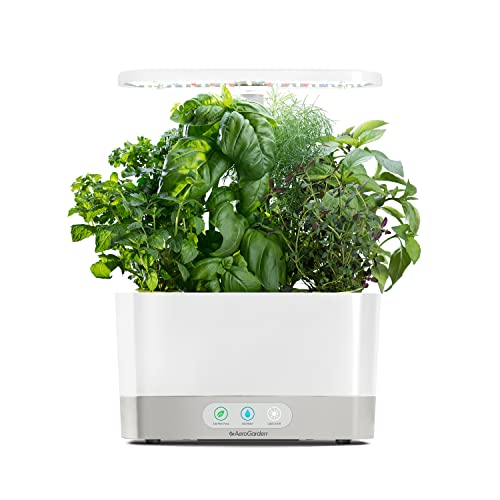
AeroGarden Harvest Indoor Herb Garden
A compact countertop hydroponic garden with a built-in grow light and a six-pod seed kit. A way to keep basil and other herbs going indoors when a sunny windowsill is not enough.
Pros
- Six-pod countertop garden with a built-in light
- Hydroponic growing, no garden bed required
- A popular, long-running indoor garden model
What the Harvest does well
AeroGarden's Harvest is a countertop hydroponic unit: the plants sit in pods, their roots grow in water with added nutrients, and a light on a boom supplies the spectrum and day length the seedlings need. You do not need a yard, and you do not need to guess whether a windowsill is bright enough. For cooks who want basil through a dark winter, that is the appeal.
Owner reviews, which are numerous for this model, tend to praise how quickly herbs take off when the light and feeding schedule are followed, and they tend to be frank about the ongoing costs: seed pod kits, plant food, and the electricity of a light that runs many hours a day. Those are real, modest running costs, not hidden tricks, and they are worth naming before you fall for the first flush of greenery.
The six-pod size is personal, not industrial. It will keep a household in basil, parsley and a couple of other herbs if you harvest often, which is also how you keep the plants from getting leggy and crowded. It will not replace a farmers-market haul or a backyard bed of tomatoes. People who treat it as a pretty herb rack, not a food-growing appliance, seem happiest.
Who it is for
- Cooks in apartments or dim kitchens who miss the luxury of cutting herbs at the last minute.
- People who like a small daily ritual, topping up the reservoir, and watching seedlings come up.
- Anyone who already thinks about a more edible home, from leftovers to, when the season allows, a pollinator-friendly outdoor garden.
Who should skip it
- You have a genuinely sunny window and enjoy ordinary pots. Soil and a clay pot are simpler, and they do not ask you to buy pods.
- You travel often or forget plants. A hydroponic garden can go wrong faster than a slightly dry windowsill pot if the reservoir runs dry.
- You want vegetables at a meaningful scale. Look at a larger garden system, a community plot, or the outdoor bed you actually have.
- The counter is already crowded. This needs a dedicated rectangle of space and a nearby outlet.
Living with it, without the mythology
Follow the light-height and feeding guidance that comes with the unit. Harvest early and often, especially basil, so the plants stay productive rather than tall and thin. Keep the reservoir in mind the way you keep a kettle filled. When a plant declines, replace it rather than bargaining with a single unhappy pod.
You can also use an indoor garden as a complement to simpler habits, rooting green onions in a jar, or potting a supermarket herb that still has some life in it. The Harvest is the more designed version of that instinct. It is worth it if the design will help you follow through.
Frequently Asked Questions
Do I have to use the brand's seed pods?
The unit is designed around its pod kit and nutrients, which is the path of least resistance. Some owners use their own seeds in compatible pods. If you do, you are outside the standard setup, and germination will be on you.
How much electricity does a countertop garden use?
The light runs many hours a day, like a small household lamp on a schedule. It is not a space heater, and it is not free. If you only want a little parsley, a windowsill still wins on energy.
Will it replace buying herbs at the store?
For a few tender herbs, often yes, if you harvest regularly. For a large bunch of cilantro on a single taco night, you may still shop. Think of it as a living pantry, not a grocery store.
What happens when I go on vacation?
A week can be manageable if the reservoir is full and the plants are established. A longer trip usually needs a neighbor or a timer-and-water plan. If you are away often, ordinary pots or a jar of window herbs may fail more gently.