"Under-Sink Reverse Osmosis: APEC and iSpring Compared"
An under-sink reverse osmosis system is a bigger commitment than a fridge pitcher: it takes cabinet space, it needs a drain connection, and it wastes some water in the process of making a cleaner glass. For households that want a dedicated drinking tap and broader reduction than a pitcher can offer, it can still be the more satisfying long-term setup.
This is a research-based comparison of two long-selling, highly rated traditional systems: the APEC Essence ROES-50 and the iSpring RCC7AK-BN. It is not a hands-on lab test. Specs and certifications below come from the manufacturers and from current certification listings, which you should re-check before you buy, because listings do change.
The short version
- Choose the APEC ROES-50 if you want a straightforward five-stage, 50-gallon-per-day system with a long installation history and WQA certification to NSF/ANSI 58.
- Choose the iSpring RCC7AK-BN if you prefer a 75-gallon-per-day rating and an alkaline remineralization stage, so the water is not left quite so flat.
- Skip under-sink RO if you mainly want better chlorine taste, you rent and cannot drill a faucet hole, or you would rather start with a certified pitcher.
How the two systems compare
System | Stages | Rated production | What stands out | Details |
|---|---|---|---|---|
APEC ROES-50 | 5 | 50 GPD | Traditional RO, WQA listing to NSF/ANSI 58 | |
iSpring RCC7AK-BN | 6, with alkaline stage | 75 GPD | Remineralization and a brushed-nickel faucet |
Rated gallons per day assume typical test conditions (pressure and water temperature). Real output in a home is often lower, especially with cold incoming water or lower pressure.
What reverse osmosis actually does
RO pushes water through a semi-permeable membrane. It can reduce a wide range of dissolved solids, which is why people consider it for taste and for contaminants a carbon pitcher may not address as thoroughly. It is still a point-of-use system for the water you drink and cook with, not a whole-house treatment plant.
Independent certification matters more than marketing language. NSF's guide to home water treatment and EPA's pages on drinking water are the right places to start. In short, NSF/ANSI 58 is the standard that covers reverse osmosis systems. Always match the listing to the exact model, and to the specific claims you care about.
RO also has trade-offs worth naming up front:
- It uses cabinet space and usually a small storage tank.
- It sends some water to the drain for every gallon you keep. Efficient membranes help, but they do not eliminate that flush.
- Pure RO water can taste flat. Some people like that neutrality; others prefer a remineralization stage, which is the main reason to look at the iSpring AK model.
- Filters and the membrane are consumables. Budget for replacements, and follow the maker's schedule, or the system will not keep performing as listed.
If you are on a public supply, read your utility's consumer confidence report first. If you have a private well, or a specific concern such as lead in older plumbing, testing is more useful than buying a system "just in case." EPA's advice on getting your water tested is a clear starting point.
APEC Essence ROES-50
The ROES-50 is APEC's well-known five-stage under-sink system, rated at 50 gallons per day, with a storage tank and a dedicated faucet. The usual stage layout is sediment and carbon pre-filters, the RO membrane, and a post-carbon polish. APEC has sold this configuration for many years, and it has a very large body of owner reviews, which is useful when you want a design that installers and handy homeowners already understand.
The system is listed by the Water Quality Association to NSF/ANSI 58. As of this writing, it is important to read the current listing for the exact claims; some listings cover TDS reduction rather than every contaminant a shopper might hope for. If you have a specific health-related concern, confirm it is on the current certificate, not just in a marketing bullet.
Who it is for: a household that wants a proven, relatively compact traditional RO system and is comfortable with the taste of demineralized water, or willing to add a remineralization cartridge later if the maker offers one.
Who should skip it: anyone who wants a higher daily rating or a built-in alkaline stage, or who cannot give up the under-sink space.
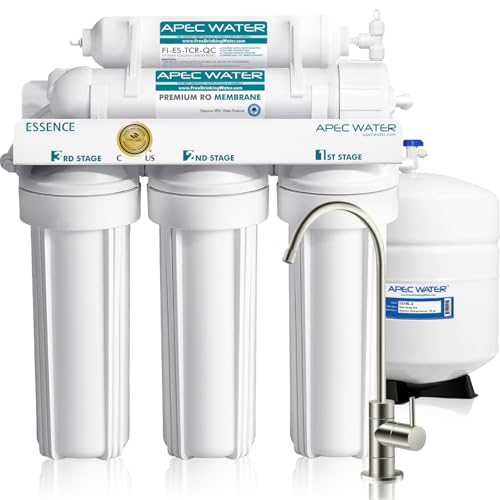
APEC Essence ROES-50 5-Stage Reverse Osmosis System
A compact under-sink reverse osmosis system rated at 50 gallons per day, with five filtration stages and a storage tank. A long-standing, highly rated choice for households that want a traditional RO setup.
Pros
- Five-stage RO with a 50 GPD rating
- WQA certification to NSF/ANSI 58 (check the current listing)
- A widely installed, well-documented design
iSpring RCC7AK-BN
The RCC7AK-BN is iSpring's six-stage alkaline system, rated at 75 gallons per day, with a brushed-nickel faucet. The extra stage is the point: after the membrane, water passes through a remineralization cartridge intended to add back some minerals and raise pH, which many owners prefer to "flat" RO water. The daily rating is higher than the APEC's on paper, though, again, household pressure and temperature will have the last word.
This is one of the more frequently compared alkaline RO systems, with a very large review history. That volume of owner feedback is helpful on installation quirks, filter changes and faucet finish, which are the parts of living with a system that a spec sheet never quite captures.
As with the APEC, treat certifications as model-specific. iSpring's broader RCC7 family has NSF/ANSI 58 listings on certain versions; confirm the exact RCC7AK-BN (or the current equivalent) in the official directory before you rely on a health claim.
Who it is for: cooks and tea drinkers who want RO reduction but would rather not drink completely "empty-tasting" water, and households that like the slightly higher rated output.
Who should skip it: people who prefer the simplest five-stage layout, or who want a tankless, higher-efficiency system and are prepared to shop in that newer category instead.
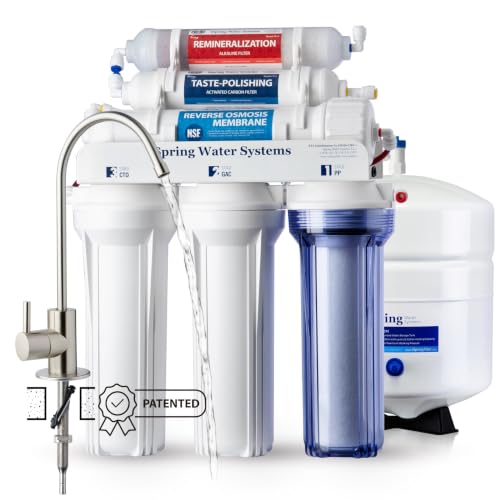
iSpring RCC7AK-BN 6-Stage Alkaline Reverse Osmosis System
A six-stage under-sink RO system rated at 75 gallons per day, with an alkaline remineralization stage and a brushed-nickel faucet. A strong alternative if you want RO water that is not left quite so flat.
Pros
- Six stages, including alkaline remineralization
- 75 GPD rating and a brushed-nickel faucet
- A very large body of owner reviews
Alternatives, and when a pitcher is enough
If your main goal is chlorine taste, or you are not ready to drill a faucet hole, a certified pitcher is the gentler first step. Our water filter pitcher guide explains NSF/ANSI 42, 53 and PFAS claims in plain language.
A tankless, higher-output under-sink unit can make sense in a busy kitchen that does not want a storage tank, but it is usually a larger purchase, and it should still be chosen by current certifications, not by a headline gallon number alone.
RO is only one piece of using water thoughtfully. If you are also trying to cut household water use, or you need a plan for storing and treating water in an emergency, those guides cover the habits that sit around the drinking tap.
Frequently Asked Questions
Is under-sink reverse osmosis better than a pitcher?
It can reduce a broader range of dissolved solids, and it gives you a dedicated faucet. It also costs more to install, uses more space, and wastes some water. For taste-only problems, a certified pitcher is often enough.
How much water does an RO system waste?
Traditional systems send some water to the drain for each gallon you keep. The exact ratio depends on the membrane, incoming pressure and how often you draw water. If drain water is a deciding issue, look at current efficiency ratings rather than at older rules of thumb.
Do I need the alkaline remineralization stage?
Only if you dislike the taste of demineralized water or you prefer a slightly higher pH. It is a preference feature, not a requirement for the membrane to do its job.
Can I install one of these myself?
Many handy homeowners do, but you should be comfortable with a drain saddle, a faucet hole (unless you already have one) and checking for leaks. If you are not, a licensed plumber is the calmer path.
How often do the filters and membrane need changing?
Follow the manufacturer's schedule, which usually means pre-filters more often than the membrane. An overdue pre-filter can shorten membrane life. Keep a record of the install date on a piece of tape inside the cabinet.